
Tried every pillow on the market and still can’t find the right one? You’re not alone. Many people cycle through pillow after pillow, hoping the next one will finally bring relief, only to wake up with the same neck tension, restless sleep, or vague feeling that something just isn’t right. When that happens, it’s natural to start thinking: maybe I should just make my own.
The DIY pillow instinct often comes from frustration, but it can also be surprisingly smart. When done thoughtfully, a DIY approach allows you to listen to your body instead of forcing yourself to adapt to a one-size-fits-all product. The key is simplicity. Most DIY pillows fail not because the idea is wrong, but because they rely on too much adjustability and not enough structure.
Many homemade pillows are filled entirely with loose materials like shredded foam, kapok, or buckwheat hulls. While these fills are appealing because they seem customizable, they tend to shift during the night, compress under the weight of your head, and feel different every time you lie down. Instead of resting, you end up constantly fluffing, redistributing, and adjusting.
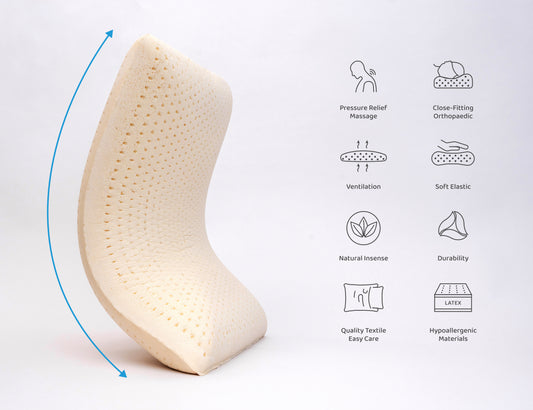
A more reliable approach starts with stable support. Using a thin solid latex pillow core as a base creates a consistent foundation that holds its shape throughout the night. Latex responds gently to pressure while maintaining resilience, which helps keep the neck and cervical spine in a more neutral position. Rather than collapsing or migrating, it stays where it should, hour after hour.
On top of this solid base, a small adjustable layer adds comfort and personalization. Materials like kapok or buckwheat work well here, but in modest amounts. Kapok provides a soft, airy surface feel, while buckwheat offers more structure and breathability. Because this layer sits above the latex core, it allows you to fine-tune the loft and surface sensation without compromising the underlying support.
The setup itself matters just as much as the materials. A zippered pillow cover, ideally with an inner liner, makes experimentation easy and clean. You can remove or add fill gradually, observe how your body responds over a few nights, and make small adjustments instead of drastic changes. Starting with less fill than you think you need usually leads to better results and less frustration.
What makes this approach work is balance. The latex core provides stability, while the top layer offers flexibility. You’re no longer fighting a pillow that changes shape overnight, nor are you locked into a single feel that doesn’t quite suit you. Instead, you get consistent support paired with gentle customization.
A DIY pillow doesn’t need to be complicated to be effective. In fact, the simpler the structure, the more reliable it tends to be. If you’ve tried countless pillows and still haven’t found one that feels right, this kind of thoughtful, layered approach can be a surprisingly effective way to take sleep comfort into your own hands.
Sometimes the best pillow isn’t the most expensive or the most talked about. It’s the one that quietly supports your body exactly the way it needs, night after night.