
Falling asleep is less about willpower and more about rhythm. Our brains are deeply responsive to patterns — light, temperature, sound, even touch. Over time, repeated cues become signals that help the body understand it’s safe to slow down. This is the psychology of ritual: small, consistent actions that turn bedtime into a transition rather than an abrupt stop.
Neuroscientists describe sleep onset as a gradual shift from beta waves, associated with active thinking, to slower alpha and theta waves. The more predictable and calming your environment, the smoother that shift becomes. Bright screens, irregular schedules, or uncomfortable textures confuse the brain, keeping alertness levels higher than they should be. That’s why it often feels easier to fall asleep on holiday — when light, comfort, and pace align naturally.
Building a personal sleep ritual doesn’t require elaborate steps. Dim lights an hour before bed, keep your bedroom slightly cool, and reserve your bed only for rest. Surround yourself with tactile calm — soft textures, breathable fabrics, and materials that feel natural to the touch. Sensory comfort is one of the simplest ways to reassure the body that it’s time to let go.
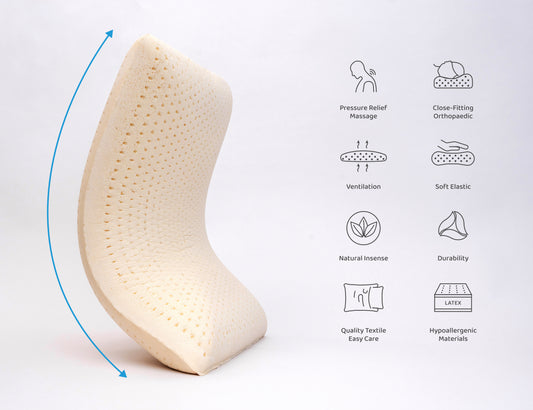
Natural latex pillows fit beautifully into this idea. They respond quietly to your movements, cradle the neck without pressure, and maintain a stable, cool surface. More than a functional object, they can become part of your nightly ritual — a familiar texture that signals rest.
Consistency turns comfort into habit. When the mind recognizes the cues, sleep stops being a struggle and becomes a return — to safety, rhythm, and balance.