
Every night, while we lie still, the brain is far from quiet. Sleep is not simply an “off” switch for consciousness — it’s a precisely orchestrated biological process that allows both body and mind to restore themselves.
Modern neuroscience divides sleep into cycles that repeat every 90 to 110 minutes. Each cycle includes stages of light sleep, deep slow-wave sleep, and rapid eye movement (REM) sleep. During deep sleep, the body repairs tissues, regenerates cells, and strengthens the immune system. In REM sleep, the brain becomes more active — processing emotions, forming memories, and integrating new experiences into long-term knowledge. This nightly maintenance is essential for cognitive clarity, mood stability, and overall health.
But sleep is delicate. Even subtle physical discomfort — a strained neck, uneven spinal support, or overheating — can disrupt these cycles and shorten the duration of deep and REM stages. Over time, such micro-interruptions accumulate, leading to fatigue that no amount of caffeine can mask.
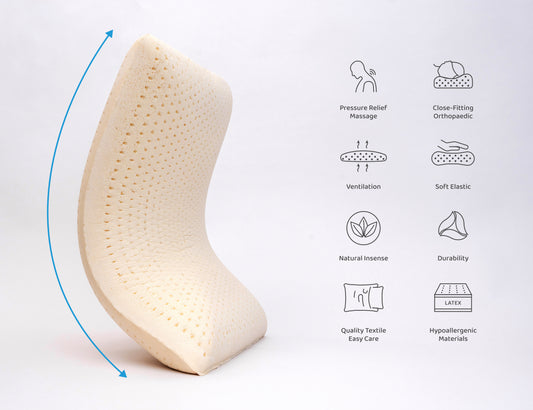
That’s why ergonomics matter more than we tend to think. A well-designed pillow helps keep the spine aligned and the nervous system relaxed, minimizing the need for constant repositioning during the night. Natural latex has unique elastic properties that let it respond instantly to your movements while maintaining consistent support. Its open-cell structure promotes airflow, keeping the pillow cool and dry — ideal for long, uninterrupted sleep cycles.
Healthy sleep is a rhythm, not a luxury. When the body feels supported and the brain can follow its natural sequence of rest and renewal, the simple act of lying down becomes one of the most powerful tools for physical and emotional resilience.